Glenville, North Carolina: Why Your Lake Glenville Dock Doesn't Transfer With the Deed
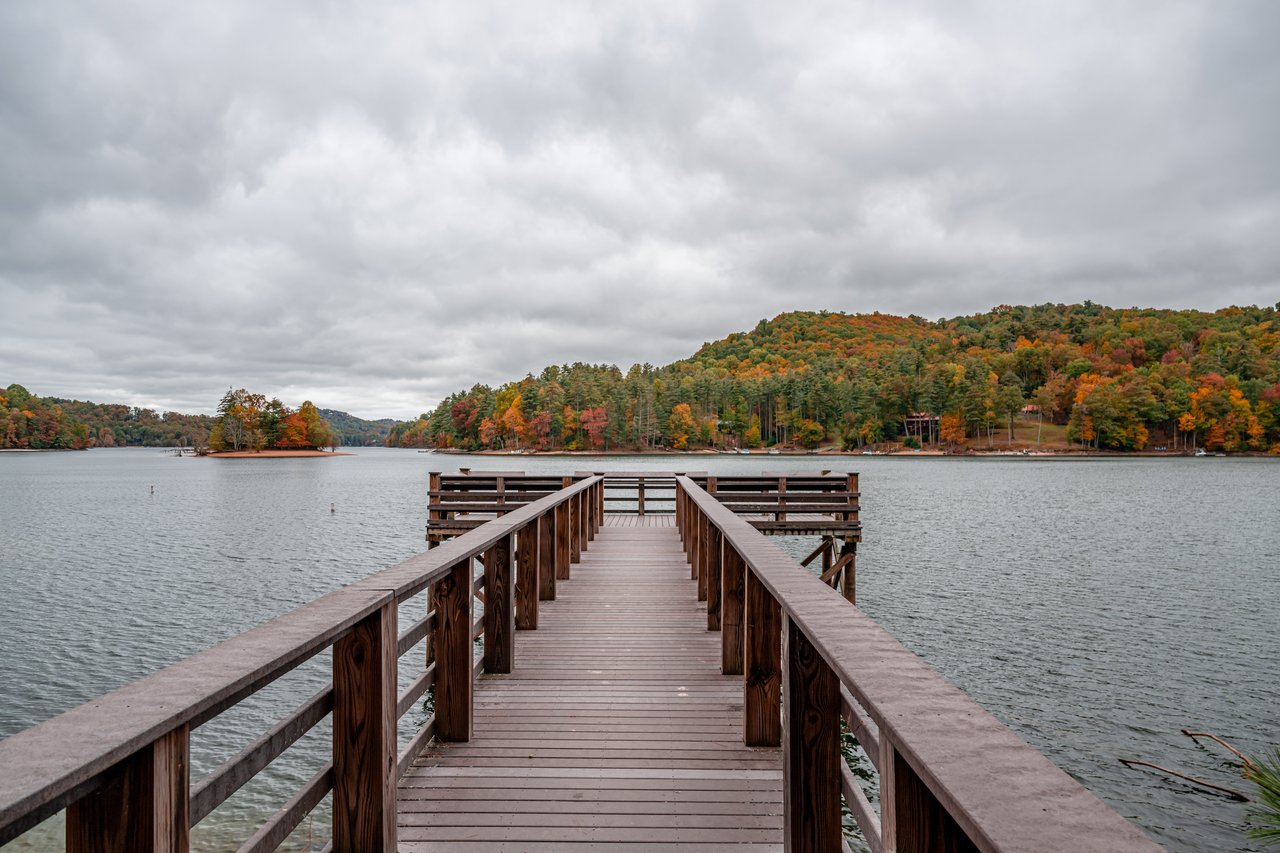
In Glenville, North Carolina, the dock in the listing photo is not part of the real estate. Lake Glenville is a Duke Energy hydroelectric reservoir operating under a federal license; the utility owns the lakebed and often a strip of land above the waterline, and the permit that makes a dock legal is issued to a person, not a parcel. When the house sells, the deed transfers at closing. The dock permit does not.
That gap matters more than it sounds, because Duke will not tell a buyer whether the existing dock is compliant. Its lake use permitting FAQ makes clear that Lake Services does not release permitting history to real estate agents, neighbors, former owners, or prospective buyers. The only party that can confirm whether your future dock was properly approved isn't allowed to answer you until you already own the house.
A workaround exists, but it must happen before your due diligence period closes. The rest of this covers what Duke actually controls, what changed in 2026 for vacant lakefront lots, and the exact documents to request from a seller.
The Lake Isn't Yours, and Neither Is the Shoreline
Lake Glenville sits inside Duke Energy's Nantahala Area hydro system, a group of reservoirs across Jackson, Macon, Clay, and Swain counties generating power under licenses issued by the Federal Energy Regulatory Commission. Duke's shoreline permitting page includes a per-lake table of required forms and fees, and Duke's Nantahala Area shoreline management plans govern what can and cannot happen along the water.
Duke's own FAQ states the ownership plainly: the company owns or controls the lakebed in its reservoirs and, depending on location, an upland buffer strip as well. Friends of Lake Glenville, the nonprofit tracking shoreline conditions on the lake, calls that boundary the 3110 line and notes that how far it sits from the water varies with each lot's slope. A steep lot and a gentle one can have very different amounts of Duke-controlled land between the house and the water.
Buyers arriving from a private lake community, or from a state where lakefront lots carry riparian ownership to the water's edge, tend to assume the dock is simply part of the purchase. On Lake Glenville, it behaves more like a revocable license that happens to sit next to a house you own.
One further point catches people who expect waterfront privacy: Duke's permits let a permittee restrict access to the pier or dock itself, but they do not let a lake neighbor restrict public use of the lake or the shoreline. Owning the house does not make the water in front of it private.
A Permit Is Personal Property, Not Real Property
Here is the mechanism. The new owner submits a construction application through Duke's online Lake Access Permit System to move the permit into their name, and only then does a Lake Services representative come out to inspect the structure. That inspection checks whether the dock still matches what was originally approved.
If a prior owner widened it, added a roof, or built a second slip without going back to Duke for sign-off, the compliance problem now belongs to whoever owns the house — regardless of when the change happened or who made it. Duke's permits are valid for one year, so a structure whose permit lapsed mid-build carries its own paperwork history.
Because Duke will not release permitting history to a buyer or a buyer's agent, there is no clean way to answer "is this dock compliant" before closing. The verification loop only opens once you are the owner of record and have applied for the transfer yourself.
What to Request From the Seller, and When
The workaround that actually protects a buyer is to ask the seller directly, in writing, for the documents Duke allows a current permit holder to produce: the original construction application and any approved modifications. If the seller cannot find them, Duke will issue a copy to the seller at no charge as long as the permit is in that seller's name.
Make that request before the due diligence period ends, not after closing. It is the difference between inheriting a paperwork gap you can still negotiate around and inheriting one you cannot. Our due diligence process page covers how the North Carolina timeline works, and a survey is worth ordering here specifically to locate the project boundary relative to the house.
New for 2026: No Home, No Dock Permit
This one changes the math on vacant lakefront land. Duke Energy's shoreline permitting page states that effective July 1, 2026, the company no longer reviews private dock applications where no home has been constructed on the adjoining lot. The change applies to all Duke Energy lakes and covers private dock permits only, not shoreline stabilization requests.
If you are buying a lakefront lot with the intention of permitting a dock first and building later, that sequence is no longer available. The house comes first. Anyone pricing a vacant Lake Glenville lot assuming a dock permit is a near-term certainty should reprice it, and anyone currently marketing such a lot should expect the question.
The Rest of the Rulebook
- No covered or enclosed structures. Covered or enclosed piers and docks are not permitted on Lake Glenville, per guidance Friends of Lake Glenville publishes to its members. A boathouse you saw on another Duke lake is not a template for this one.
- Wake surfing is restricted by statute. S.L. 2025-15 (House Bill 183), effective October 1, 2025, prohibits wake surfing on Lake Glenville within 200 feet of the shoreline or any structure, moored vessel, kayak, canoe, paddleboard, or swimmer. A violation is a Class 1 misdemeanor carrying a minimum $100 fine, as summarized by the UNC School of Government and by Friends of Lake Glenville.
- Permits expire. Lake use permits are valid for one year. If construction is not finished within that window, the applicant must reapply.
- Get approval first. Friends of Lake Glenville recommends that Duke approve any change inside the project boundary in advance, citing significant penalties otherwise.
None of these rules are unusual for a Duke Energy lake. What is unusual is how many of them converge at the moment a sale closes, when a new owner is simultaneously moving in, registering a permit transfer, and finding out whether the dock they photographed is the one Duke actually approved.
What Transfers at Closing, and What Doesn't
The deed to the house and lot | The Duke Energy lake use permit for any dock, pier, or shoreline structure |
Any recorded easements tied to the property | Confirmation that the existing structure matches the original permit |
Standard title insurance covering the land | Duke's inspection and sign-off during the transfer application |
Property tax responsibility | Correction of any compliance issue Duke identifies |
How to Check the Boundary Yourself
Friends of Lake Glenville recommends that owners locate the project boundary using the county property viewer or by finding the physical boundary markers. The Jackson County GIS Department maintains the Real Property Viewer for exactly this. Pair that with the recorded plat — our Macon and Jackson County deeds page points to where those records live —, and you can see roughly how much Duke-controlled land sits between a house and the water before you ever write an offer.
For anything ambiguous, email Duke's Lake Services team directly at [email protected] or call 800.443.5193. They will not give you another party's permit history, but they will answer general questions about what the shoreline rules allow.
Two Relationships, Not One
Buying on Lake Glenville means entering two relationships at once. The first is with the seller, closed through a standard North Carolina contract. The second is with Duke Energy, and it only truly begins after you hold the deed. Knowing that going in changes what you ask for during due diligence, and it changes how you read a listing that says nothing more than "dock included."
If you are weighing a purchase on Lake Glenville or comparing it against Cashiers generally, we can walk you through what to request from a seller before you are under contract, not after. Your closing attorney should see the permit documents too. Start your mountain story.
Frequently Asked Questions
What is the Glenville NC zip code?
Glenville, North Carolina uses zip code 28736. The community sits in Jackson County along NC Highway 107 north of Cashiers, and properties around Lake Glenville may use either a Glenville or a Cashiers mailing address depending on location, so confirm against the tax record rather than the listing.
What county is Cashiers NC in?
Cashiers is in Jackson County, North Carolina, and so are Glenville and all of Lake Glenville. That means Jackson County handles the tax records, GIS parcel data, permitting, and register of deeds filings for any lakefront purchase here — not Macon County, which covers Franklin and most of Highlands.
Where is Cashiers NC?
Cashiers sits on the Highlands-Cashiers plateau in Jackson County, centered on the intersection of US Highway 64 and NC Highway 107, roughly a 25- to 30-minute drive east of Highlands. Lake Glenville is a few miles north along NC 107 at about 3,500 feet, the highest-elevation lake east of the Mississippi.
What is Lake Glenville weather like through the year?
At roughly 3,500 feet, Lake Glenville runs cooler than the surrounding lowlands, with a boating season concentrated from late spring through October. Elevation also shortens the shoulder seasons. Because it is a working hydroelectric reservoir, water levels vary with Duke Energy's operations rather than tracking rainfall alone.
Does the dock permit transfer when I buy a Lake Glenville home?
No. The deed transfers at closing, but the Duke Energy lake use permit does not, because it is issued to a person rather than to the parcel. The new owner submits a construction application to move the permit into their name, which triggers an inspection confirming the structure matches what was originally approved.
Can I get a dock permit on a vacant Lake Glenville lot?
Not since July 1, 2026. Duke Energy no longer reviews private dock applications where no home has been constructed on the adjoining lot, and the change applies across all Duke Energy lakes. Shoreline stabilization requests are not affected. Buyers of vacant lakefront land should build before counting on dock approval.
Does any of this affect lake view homes rather than lakefront?
No. These rules govern structures built inside Duke's project boundary along the water. A lake view lot without shoreline frontage carries no dock permit question at all, which is one reason lake view and lakefront pricing diverge more sharply here than buyers expect.
What if the seller cannot find any record of the original permit?
That absence is itself useful information. Use the due diligence period to ask Duke's Lake Services team in writing whether any permit exists for the address, rather than assuming silence means the structure is fine. Duke will reissue a copy free of charge to a seller whose name is on the permit.
You May Be Interested In
- Lake Glenville Community Guide — current listings and area profile.
- Lake Glenville and Other WNC Lakes for Buyers — how the region's lakes compare on access and ownership.
- Choosing Lakefront, Lake View, or Lake Access at Fontana Lake — the same distinction on a TVA lake.
- Why Lake Glenville's Labor Day Traffic Happens on the Water — what peak season actually looks like.
- Surveys — why a boundary survey matters more on a reservoir lot.
- Due Diligence Process — the North Carolina timeline in full.