Drive along NC-107 past Signal Ridge Marina the Saturday before Labor Day, and the road looks like any other late-summer Saturday in Jackson County. A few trucks with empty trailers, a line at the gas pump, nothing that would make a passerby think twice. Turn into the marina lot, though, and the story changes. Boats queue at the fuel dock. Dry storage racks empty out faster than the staff can log them. Coolers and tubes stack up by the ramp waiting for pickup.
That gap between what the highway shows and what the water actually holds is the whole story of Labor Day on Lake Glenville. The crowd is real. It just never shows up where you'd expect to find it.
Six Miles Long, Twenty-Six Miles of Shoreline
Lake Glenville covers about 1,470 acres, which, by itself, sounds modest compared to some of the region's better-known reservoirs. What the acreage figure hides is the shape. The lake stretches roughly six miles from end to end but unfolds into 26 miles of shoreline, a ratio of edge to open water that runs far higher than a rounder lake of the same size would produce. Instead of one wide bowl where boat traffic can spread out, Glenville is a long spine with fingers and coves branching off it.
That geometry is the reason a holiday weekend here feels more crowded than the same number of boats would feel on a lake shaped like a circle. There's simply less open water to disperse into. Every wake, every idling pontoon, every kayak crossing gets concentrated into a narrower channel than boaters coming from bigger lakes are used to.
Where the Boats Actually Cluster
Traffic on Glenville doesn't distribute evenly along the shoreline either. Most boats on the lake are headed toward the same handful of destinations, because the lake's real draw isn't open-water cruising; it's the waterfalls you can only reach by water:
- Norton Falls, one of the lake's signature boat-only stops.
- Mill Creek Falls, a regular feature on most boat itineraries
- Hurricane Falls, the third of the lake's boat-accessible cascades
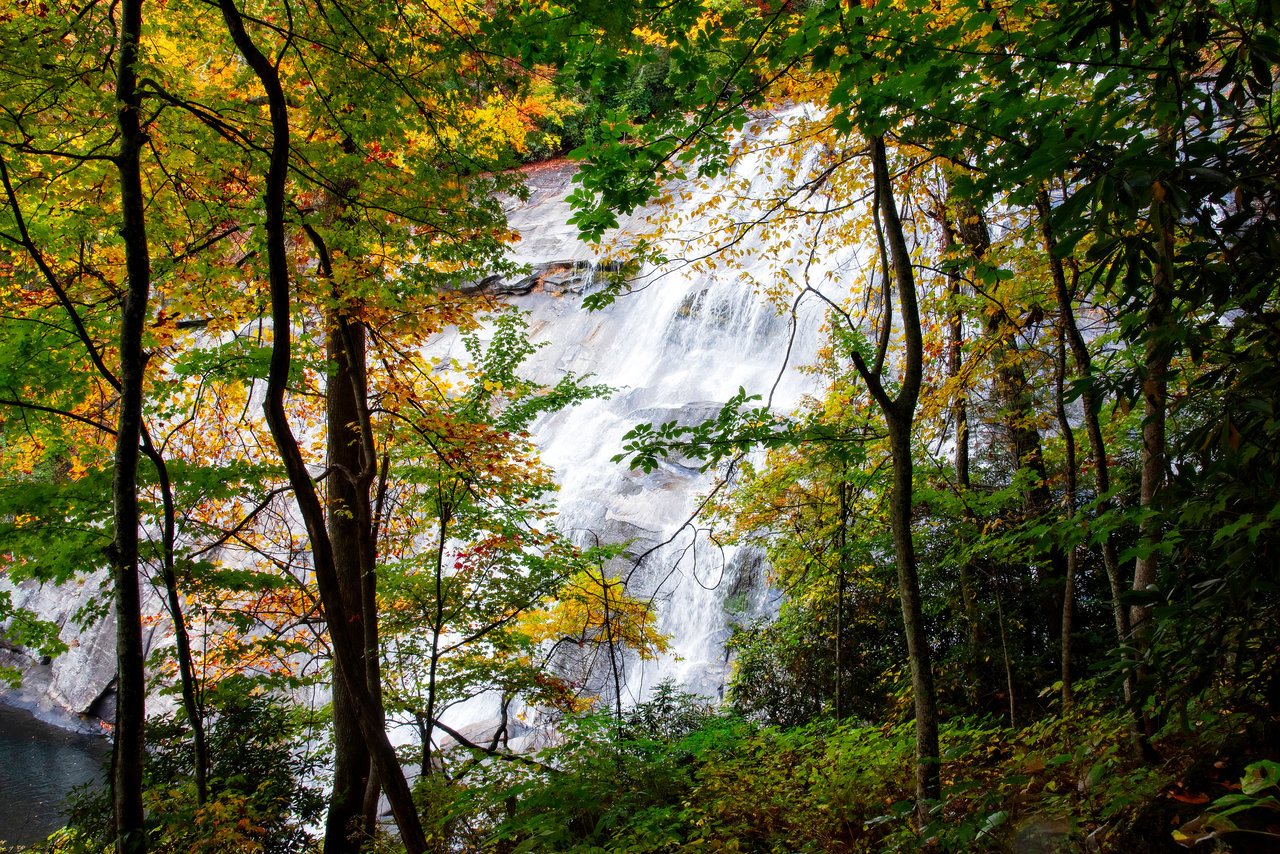
- High Falls, visible from the water near the dam and reachable on foot via a 3.7-mile out-and-back trail
Boaters don't just pass these spots; they anchor and linger, so the falls feel less like scenery and more like informal gathering points. On a busy weekend, that's where the bunching happens, not evenly across the lake but in clusters around four fixed locations.
Three Ramps, Two Marinas, One Beach
The lake's public infrastructure is just as concentrated as its geography. Boaters without lake-house dock access are funneled through one of three public launch points: the Pine Creek Access Area and the Powerhouse Access Area, both off Pine Creek Road on the north end, and the boat ramp at Ralph J. Andrews County Park. That's the entire public entry system for 26 miles of shoreline.
Fuel and rentals run through an even narrower bottleneck. Signal Ridge Marina, open since 1994, is the only full-service marina on the lake, handling gas, boat sales, service, storage, and rentals from a single dock. Lakeshore Marina, locally owned since 2000, also covers the rental side, and recent visitor reviews describe the operation under new ownership as working through improvements to the docks and dry storage. Between the two of them, every renter, every refuel and every dry-storage pickup on the entire lake passes through one of two driveways.
The one public swim spot follows a similar pattern. The Pines Recreation Area, built by Duke Energy as part of its hydroelectric relicensing commitments, offers a swim beach, a fishing pier, picnic tables, and a free life-jacket loaner board, and is fully accessible and popular enough to be the closest thing Glenville has to a public beach day. It runs on a seasonal window, open from Memorial Day weekend through the end of summer, which means Labor Day marks the last weekend it operates at full capacity before the crowds thin out for the year.
The Rule Nobody Posted
None of this is signposted anywhere on the lake, but longtime boaters on Glenville follow an unwritten code that becomes more important the fuller the lake gets:
- Keep your wake small when entering coves, since narrow water amplifies chop more quickly than open lakes.
- Stay to the right when passing another boat head-on.
- Give real space to kayaks and paddleboards, since they have nowhere to go if a cove narrows and a wake catches them.
On a lake with this little open water to work with, courtesy isn't optional politeness. It's closer to traffic law, just one nobody had to write down because the lake's shape enforces it on its own.
A Calendar Duke Energy Writes, Not the Chamber
Part of what makes Glenville different from a typical vacation lake is that tourism boards or resort calendars don't set its rhythms. A hydroelectric license sets them.
The Pines Recreation Area exists and opens on its seasonal schedule because Duke Energy is required to provide it under the terms of its FERC hydropower license for the dam, not because it's a marketing amenity. The same license also mandates a set number of water releases from the Glenville Dam into the West Fork Tuckasegee River each year, timed releases that turn a normally placid stretch of river into Class IV whitewater for about 5.5 miles below the dam. For 2026, those releases were scheduled for April 25 and 26, June 13, July 4, July 25, August 8, and August 29, each running from 10 a.m. to 4 p.m. at a target flow of roughly 250 cubic feet per second.
That last date matters right now. As of today, the sixth and final scheduled release of the year already happened two days ago, on August 29. Locals who wanted to watch or paddle that stretch of whitewater already had their last chance for the season. Anyone hoping to catch it will have to wait until next year's schedule comes out.
It's a small detail, but it captures something true about living on this particular lake. The seasonal rhythms residents plan around- when the beach is staffed, when the whitewater runs- aren't chosen for convenience. They're conditions attached to a federal license, and the Friends of Lake Glenville nonprofit tracks them because Duke Energy's obligations are the actual calendar the lake runs on.
The Last Full Weekend Before the Taper
Boating season on Glenville runs from late May through September, and Labor Day is the last of the three weekends, alongside Memorial Day and the Fourth of July week, when rental demand consistently books up early. Current pricing on the lake gives a sense of what residents and visitors are working with heading into the holiday:
Per hour (pontoon/tritoon) | $70–$120 |
Half day | $300–$450 |
Full day | $500–$850 |
After this weekend, the lake doesn't close, but it does slow down. October brings some of the best leaf color of the year and noticeably quieter water, though several operators cut back their hours once the crowds thin. Labor Day functions less like a random holiday spike and more like the last full-capacity weekend of Glenville's calendar year.
Dining options for boaters follow the same scarcity pattern as everything else on this lake. Trillium, a private residential community on Lake Glenville, operates The Landings, which the community's own materials describe as the lake's only true lakefront restaurant. It isn't open to the general public, which means even the one waterside dinner option along all 26 miles of shoreline is off-limits to most passing boaters. Add that to two marinas, three public ramps, and one public beach, and the picture becomes clear: Glenville doesn't lack amenities because it's remote. It lacks them because the lake was built for hydropower first and recreation second, and everything residents now enjoy on the water fits into whatever room that left.
None of this makes Labor Day on Lake Glenville any less worth being on the water for. It means the crowding you'll notice this weekend isn't really about how many people showed up. It's about how little room a six-mile lake with 26 miles of shoreline ever had to spread them out.
If you're already living the rhythm of this lake, watching the marina lots fill while the highway stays quiet, you know something about this place that doesn't show up on a listing photo. When the time comes to talk about what your dock, your cove, or your view is actually worth, Vignette Realty knows this shoreline the same way you do, one cove at a time. Start Your Mountain Story whenever you're ready.