Franklin, NC to Bryson City: 6 Western North Carolina Towns Compared
The short answer: Six towns sit along or near the corridor from Asheville to Bryson City: Franklin, Waynesville, Sylva, Dillsboro, Bryson City, and Cherokee. They offer genuinely different lives:
- Franklin: the lowest entry price and a year-round community
- Waynesville: the best Asheville access
- Sylva: the most central location, with a walkable downtown
- Dillsboro: the smallest scale
- Bryson City: national park access and rental demand
- Cherokee: sits on tribal trust land that most buyers cannot purchase.
Out-of-state buyers usually arrive with a map and a list of similarly named towns. They are not similar. The corridor runs west from Asheville through Waynesville, Sylva, and Dillsboro toward Bryson City and Cherokee, with Franklin south on US 441. The six communities differ in price, pace, and daily life. Cherokee also differs in a form of land ownership most buyers have never encountered.
Vignette Realty has completed more than 550 transactions and $182 million in sales volume, much of it helping buyers compare these towns before they book a trip.
How to Drive From Franklin, NC to Bryson City (and From Asheville)
From Franklin: Take US 441 north toward Dillsboro and Sylva, then US 74 west to Bryson City, where Exit 67 serves downtown. The drive is typically under an hour in normal traffic. To go from Franklin, NC to Cherokee, NC instead, stay on US 441 north past Dillsboro.
From Asheville: Take I-40 west to Exit 27, then follow US 74 west through Waynesville, Sylva, and Dillsboro to Bryson City. Going from Asheville to Franklin, NC works the same way: I-40 west to US 74, then US 441 south at Dillsboro.
Franklin is not on the Asheville-to-Bryson City line. It sits south of it, which is exactly why Franklin feels less like a commuter town and more like its own place.
Read This Before You Compare Prices
If you pull market data for these towns, you will get numbers that disagree wildly. That is because different trackers measure different things: one reports the median sale price, another a typical home value, a third the median list price. They are not interchangeable.
Here is what current sources show, labeled by what each one measures:
Franklin | Median sale price, 3 months ending June 2026 | $264,856 (up 1.3% year over year) | Redfin |
Franklin | Typical home value, mid-2026 | $292,179 | Zillow |
Waynesville | Typical home value, mid-2026 | $363,560 (down 4.4% year over year) | Zillow |
Sylva | Median list price, August 2026 | $450,000 (112-day median time on market) | Movoto |
Bryson City | Typical home value, mid-2026 | $313,872 (down 2.0% year over year) | Zillow |
Dillsboro | Too small for reliable town-level statistics | Compare against Sylva and adjust for the parcel | None |
Comparing like with like, Zillow's typical home value runs from about $292,000 in Franklin, to $314,000 in Bryson City, to $364,000 in Waynesville. Sylva's $450,000 is a list price, meaning what sellers are asking, so it isn't directly comparable to the others.
The 6 Towns, Compared
1. Franklin: Best for a Year-Round Base
Franklin has county-seat services, a working downtown, and access to the Nantahala National Forest. It functions as a full-time community rather than a seasonal one. That shows up in everything from grocery selection to whether your neighbors are home in January.
- Pros: the broadest service base at the lowest entry price on this list, and a genuine year-round population.
- Cons: the longest drive to Asheville. You'll need to check steep roads, wells, septic systems, and internet availability parcel by parcel.
2. Waynesville: Best for Asheville Access
Waynesville is the closest of these towns to Asheville and I-40, with Haywood County services and an active downtown. If someone in the household needs to get to Asheville regularly, this is the practical answer.
- Pros: regional access, the largest service base outside Asheville, and a downtown with real year-round activity.
- Cons: more traffic, more development pressure, and higher pricing than the towns farther west.
3. Sylva: Best for Connectivity and a Walkable Core
Sylva sits where US 441 and US 74 meet, which makes it the natural hub of the corridor. Western Carolina University in nearby Cullowhee adds a year-round population, plus restaurants and events that seasonal towns cannot support.
- Pros: central to everything on this list, a compact walkable downtown, and access to the Tuckasegee River.
- Cons: valley geography means tighter lots, highway noise on some parcels, and less privacy than acreage buyers expect.
Buyers looking at houses for sale in Sylva, NC should weigh lot size and road noise as heavily as the house itself. Explore Sylva NC real estate. 4. Dillsboro: Best for a Smaller River-Town Feel
Dillsboro is a compact village between Sylva and Bryson City on the Tuckasegee River, with a small commercial center and direct access to US 74.
- Pros: intimate scale, with Sylva's services five minutes away. You get the small-town feel without the isolation.
- Cons: very limited inventory, few daily services of its own, and heavy seasonal visitor traffic for its size.
Homes for sale in Dillsboro, NC come up rarely. If you want Dillsboro, set up a search alert and be ready to move.
5. Bryson City: Best for National Park Access
Bryson City is the gateway to the Deep Creek area of Great Smoky Mountains National Park, with streams, waterfalls, hiking, and a campground just north of town. It is the most tourism-driven market on this list, which cuts both ways.
- Pros: park access, rafting and scenic railroad attractions, and short-term rental demand that can support an income strategy.
- Cons: resale and income both depend on tourism. Check flood exposure, road grades, insurance availability, and short-term rental rules before you make an offer.
6. Cherokee: Understand This Before You Search
Cherokee is different from every other town on this list, and most buyer guides get it wrong.
Cherokee sits within the Qualla Boundary, an area of roughly 57,000 acres held in federal trust for the Eastern Band of Cherokee Indians (EBCI). As the Blue Ridge National Heritage Area explains, because the land is held in federal trust, it cannot be sold except to other tribal members. Only enrolled EBCI members can buy, own, and sell land within the boundary.
In practical terms, a buyer who is not an enrolled member should not plan to purchase a home within the Qualla Boundary. Cherokee is worth understanding as a neighbor and a cultural destination, and it is worth visiting. It is also a route through the Smokies toward Tennessee. It is not a conventional purchase market, and any guide that lists it alongside Franklin and Sylva without saying so is misleading you.
Two cautions:
- Mailing addresses. A Cherokee mailing address does not always mean the property is on trust land, so confirm the boundary on county GIS maps before assuming either way.
- Cherokee County. The town of Cherokee is not in Cherokee County. Cherokee County, home to Murphy and Andrews, is a separate county farther west.
If you want park access on that side of the corridor, look to Bryson City and the surrounding Swain County areas outside the boundary.
What Out-of-State Buyers Get Wrong
Most buyers arrive planning a two-day trip to cover all six towns. That produces a blur.
A better approach:
- Pick two towns based on the tradeoff that actually matters to you: Asheville access versus price, or year-round community versus park proximity.
- Spend a full day in each. Include a drive at dusk and a stop at the grocery store.
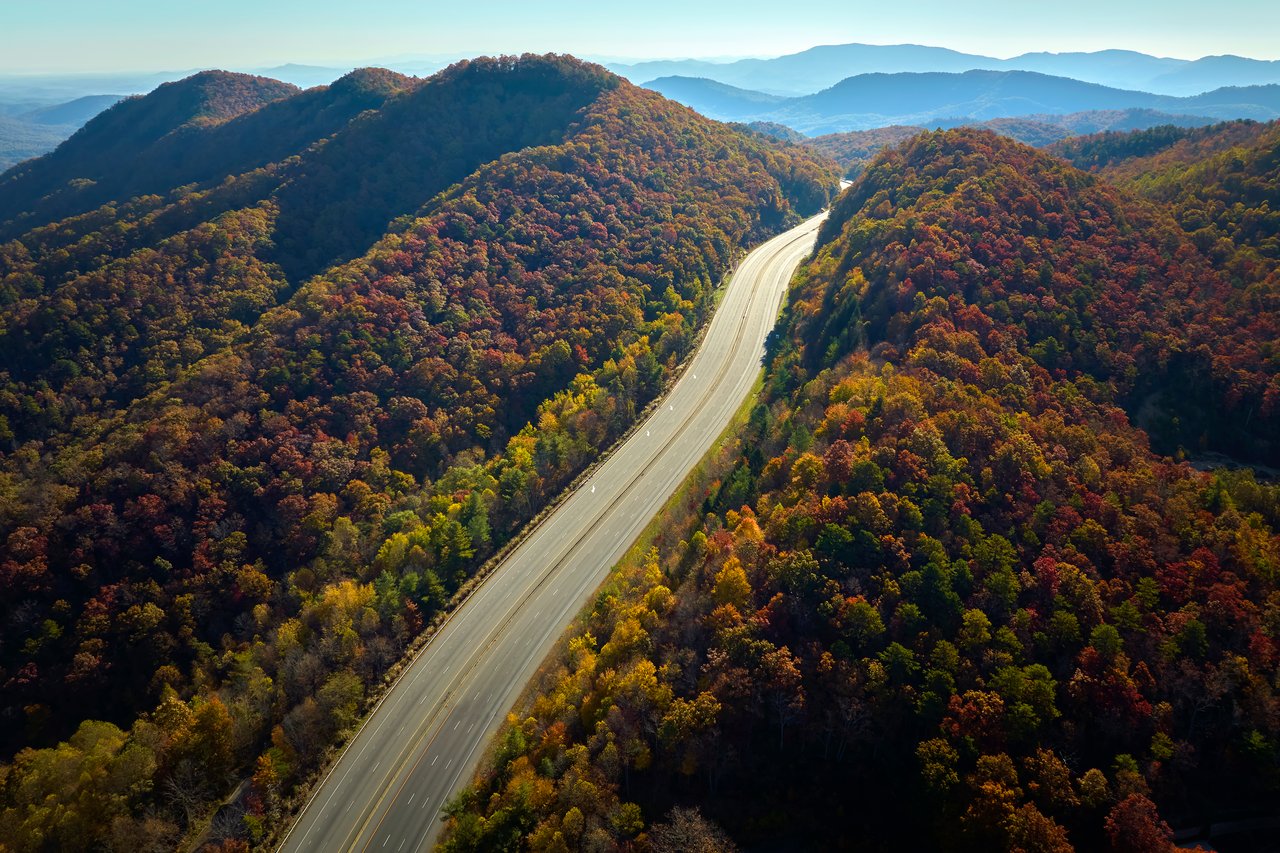
- Allow for leaf season. The corridor is roughly an hour end to end without traffic, and considerably more in leaf season. That itself tells you something about the commute you are signing up for.
The North Carolina Buying Process, Briefly
North Carolina works differently from most states, and out-of-state buyers routinely budget for it wrong.
- Due diligence fee. You negotiate a due diligence period and pay a due diligence fee directly to the seller when you sign the contract. The fee is generally nonrefundable.
- Earnest money. Earnest money is separate and is typically refundable if you terminate during the agreed period.
- Termination. Per the North Carolina Real Estate Commission, a buyer can generally terminate during the due diligence period without the seller's consent.
- Attorney closing. A North Carolina attorney conducts or supervises the closing. You select that attorney and pay them.
Both the period length and the fee are negotiable. On mountain property, negotiate a longer window than you think you need, because septic and well inspectors in this corridor book up in season.
Bottom Line
- Franklin for a year-round base at the lowest entry price
- Waynesville for Asheville access
- Sylva for connectivity
- Dillsboro for small scale
- Bryson City for the national park and rental demand
- Cherokee to visit and understand, not to buy
Search Homes Along the Corridor
Vignette Realty can build a shortlist across these towns and run a video tour of any listing, so you can check roads, slope, and neighboring development before you fly in.
Frequently Asked Questions
How do you drive from Franklin, NC to Bryson City?
Take US 441 north from Franklin toward Dillsboro and Sylva, then US 74 west to Bryson City, with downtown access at Exit 67. The drive is typically under an hour in normal traffic. From Asheville, take I-40 west to Exit 27, then follow US 74 west past Waynesville, Sylva, and Dillsboro. Allow extra time during leaf season, when corridor traffic slows considerably.
Can you buy a house in Cherokee, NC?
Generally not, unless you are an enrolled member of the Eastern Band of Cherokee Indians. Cherokee sits within the Qualla Boundary, roughly 57,000 acres held in federal trust for the tribe, and the land cannot be sold except to other tribal members. Buyers who want park access on that side of the corridor should consider Bryson City and the surrounding Swain County areas, which lie outside the boundary.
What is the typical home price in Franklin, NC?
Redfin reported a $264,856 median sale price for the three months ending June 2026, up 1.3 percent year over year. Zillow's typical home value was $292,179. Both measures combine land, cabins, and existing homes, so they are benchmarks rather than valuations. Acreage, slope, road access, well and septic condition, and internet availability can substantially change actual value within the same town.
Why do home prices for these towns vary so much between websites?
Different trackers publish different measurements. A median sale price, a typical home value, and a median list price are three different numbers describing the same market, and none of them is wrong. Comparing a Zillow typical value in one town to a Redfin median in another produces a meaningless gap. Compare like measurements, or actual comparable sales for specific properties.
What North Carolina closing detail matters most to out-of-state buyers?
Budget for a due diligence fee paid directly to the seller when you sign the contract, which is generally nonrefundable. Earnest money is separate and typically refundable if you terminate during the agreed period. A North Carolina attorney conducts or supervises the closing, and you select and pay that attorney. These rules differ from title company practices in many states and affect your cash planning.
Which town is best for a short-term rental investment?
Bryson City has the strongest tourism demand because of national park and scenic railroad traffic, but both resale and rental income there depend heavily on tourism. Franklin and Sylva suit year-round occupancy strategies better. Every town regulates short-term rentals differently, and rules change, so verify current ordinances and any HOA restrictions on the specific parcel before counting on rental income. Franklin NC to Bryson City: 6 Western North Carolina Towns Compared
The short answer: Six towns sit along or near the corridor from Asheville to Bryson City: Franklin, Waynesville, Sylva, Dillsboro, Bryson City, and Cherokee. They offer genuinely different lives:
- Franklin: the lowest entry price and a year-round community
- Waynesville: the best Asheville access
- Sylva: the most central location, with a walkable downtown
- Dillsboro: the smallest scale
- Bryson City: national park access and rental demand
- Cherokee: sits on tribal trust land that most buyers cannot purchase.
Out-of-state buyers usually arrive with a map and a list of similarly named towns. They are not similar. The corridor runs west from Asheville through Waynesville, Sylva, and Dillsboro toward Bryson City and Cherokee, with Franklin south on US 441. The six communities differ in price, pace, and daily life. In Cherokee's case, they also differ in a form of land ownership most buyers have never encountered.
Vignette Realty has completed more than 550 transactions and $182 million in sales volume, much of it helping buyers compare these towns before they book a trip.
How to Drive From Franklin, NC to Bryson City (and From Asheville)
From Franklin: Take US 441 north toward Dillsboro and Sylva, then US 74 west to Bryson City, where Exit 67 serves downtown. The drive is typically under an hour in normal traffic. To go from Franklin, NC to Cherokee, NC instead, stay on US 441 north past Dillsboro.
From Asheville: Take I-40 west to Exit 27, then follow US 74 west through Waynesville, Sylva, and Dillsboro to Bryson City. Going from Asheville to Franklin, NC works the same way: I-40 west to US 74, then US 441 south at Dillsboro.
Franklin is not on the Asheville-to-Bryson City line. It sits south of it, which is exactly why Franklin feels less like a commuter town and more like its own place.
Read This Before You Compare Prices
If you pull market data for these towns, you will get numbers that disagree wildly. That is because different trackers measure different things: one reports the median sale price, another a typical home value, a third the median list price. They are not interchangeable.
Here is what current sources show, labeled by what each one measures:
Franklin | Median sale price, 3 months ending June 2026 | $264,856 (up 1.3% year over year) | Redfin |
Franklin | Typical home value, mid-2026 | $292,179 | Zillow |
Waynesville | Typical home value, mid-2026 | $363,560 (down 4.4% year over year) | Zillow |
Sylva | Median list price, August 2026 | $450,000 (112-day median time on market) | Movoto |
Bryson City | Typical home value, mid-2026 | $313,872 (down 2.0% year over year) | Zillow |
Dillsboro | Too small for reliable town-level statistics | Compare against Sylva and adjust for the parcel | None |
Comparing like with like, Zillow's typical home value runs from about $292,000 in Franklin, to $314,000 in Bryson City, to $364,000 in Waynesville. Sylva's $450,000 is a list price, meaning what sellers are asking, so it isn't directly comparable to the others.
The 6 Towns, Compared
1. Franklin: Best for a Year-Round Base
Franklin has county-seat services, a working downtown, and access to the Nantahala National Forest. It functions as a full-time community rather than a seasonal one. That shows up in everything from grocery selection to whether your neighbors are home in January.
- Pros: the broadest service base at the lowest entry price on this list, and a genuine year-round population.
- Cons: the longest drive to Asheville. Steep roads, wells, septic systems, and internet availability all need to be checked parcel by parcel.
2. Waynesville: Best for Asheville Access
Waynesville is the closest of these towns to Asheville and I-40, with Haywood County services and an active downtown. If someone in the household needs to get to Asheville regularly, this is the practical answer.
- Pros: regional access, the largest service base outside Asheville, and a downtown with real year-round activity.
- Cons: more traffic, more development pressure, and higher pricing than the towns farther west.
3. Sylva: Best for Connectivity and a Walkable Core
Sylva sits where US 441 and US 74 meet, which makes it the natural hub of the corridor. Western Carolina University in nearby Cullowhee adds a year-round population, plus restaurants and events that seasonal towns cannot support.
- Pros: central to everything on this list, a compact walkable downtown, and access to the Tuckasegee River.
- Cons: valley geography means tighter lots, highway noise on some parcels, and less privacy than acreage buyers expect.
Buyers looking at houses for sale in Sylva, NC should weigh lot size and road noise as heavily as the house itself. Explore Sylva NC real estate. 4. Dillsboro: Best for a Smaller River-Town Feel
Dillsboro is a compact village between Sylva and Bryson City on the Tuckasegee River, with a small commercial center and direct access to US 74.
- Pros: intimate scale, with Sylva's services five minutes away. You get the small-town feel without the isolation.
- Cons: very limited inventory, few daily services of its own, and heavy seasonal visitor traffic for its size.
Homes for sale in Dillsboro, NC come up rarely. If you want Dillsboro, set up a search alert and be ready to move.
5. Bryson City: Best for National Park Access
Bryson City is the gateway to the Deep Creek area of Great Smoky Mountains National Park, with streams, waterfalls, hiking, and a campground just north of town. It is the most tourism-driven market on this list, which cuts both ways.
- Pros: park access, rafting and scenic railroad attractions, and short-term rental demand that can support an income strategy.
- Cons: resale and income both depend on tourism. Check flood exposure, road grades, insurance availability, and short-term rental rules before you make an offer.
6. Cherokee: Understand This Before You Search
Cherokee is different from every other town on this list, and most buyer guides get it wrong.
Cherokee sits within the Qualla Boundary, an area of roughly 57,000 acres held in federal trust for the Eastern Band of Cherokee Indians (EBCI). As the Blue Ridge National Heritage Area explains, because the land is held in federal trust, it cannot be sold except to other tribal members. Only enrolled EBCI members can buy, own, and sell land within the boundary.
In practical terms, a buyer who is not an enrolled member should not plan to purchase a home within the Qualla Boundary. Cherokee is worth understanding as a neighbor and a cultural destination, and it is worth visiting. It is also a route through the Smokies toward Tennessee. It is not a conventional purchase market, and any guide that lists it alongside Franklin and Sylva without saying so is misleading you.
Two cautions:
- Mailing addresses. A Cherokee mailing address does not always mean the property is on trust land, so confirm the boundary on county GIS maps before assuming either way.
- Cherokee County. The town of Cherokee is not in Cherokee County. Cherokee County, home to Murphy and Andrews, is a separate county farther west.
If you want park access on that side of the corridor, look to Bryson City and the surrounding Swain County areas outside the boundary.
What Out-of-State Buyers Get Wrong
Most buyers arrive planning a two-day trip to cover all six towns. That produces a blur.
A better approach:
- Pick two towns based on the tradeoff that actually matters to you: Asheville access versus price, or year-round community versus park proximity.
- Spend a full day in each. Include a drive at dusk and a stop at the grocery store.
- Allow for leaf season. The corridor is roughly an hour end to end without traffic, and considerably more in leaf season. That itself tells you something about the commute you are signing up for.
The North Carolina Buying Process, Briefly
North Carolina works differently from most states, and out-of-state buyers routinely budget for it wrong.
- Due diligence fee. You negotiate a due diligence period and pay a due diligence fee directly to the seller when you sign the contract. The fee is generally nonrefundable.
- Earnest money. Earnest money is separate and is typically refundable if you terminate during the agreed period.
- Termination. Per the North Carolina Real Estate Commission, a buyer can generally terminate during the due diligence period without the seller's consent.
- Attorney closing. A North Carolina attorney conducts or supervises the closing. You select that attorney and pay them.
Both the period length and the fee are negotiable. On mountain property, negotiate a longer window than you think you need, because septic and well inspectors in this corridor book up in season.
Bottom Line
- Franklin for a year-round base at the lowest entry price
- Waynesville for Asheville access
- Sylva for connectivity
- Dillsboro for small scale
- Bryson City for the national park and rental demand
- Cherokee to visit and understand, not to buy
Search Homes Along the Corridor
Vignette Realty can build a shortlist across these towns and run a video tour of any listing, so you can check roads, slope, and neighboring development before you fly in.
Frequently Asked Questions
How do you drive from Franklin, NC to Bryson City?
Take US 441 north from Franklin toward Dillsboro and Sylva, then US 74 west to Bryson City, with downtown access at Exit 67. The drive is typically under an hour in normal traffic. From Asheville, take I-40 west to Exit 27, then follow US 74 west past Waynesville, Sylva, and Dillsboro. Allow extra time during leaf season, when corridor traffic slows considerably.
Can you buy a house in Cherokee, NC?
Generally not, unless you are an enrolled member of the Eastern Band of Cherokee Indians. Cherokee sits within the Qualla Boundary, roughly 57,000 acres held in federal trust for the tribe, and the land cannot be sold except to other tribal members. Buyers who want park access on that side of the corridor should consider Bryson City and the surrounding Swain County areas, which lie outside the boundary.
What is the typical home price in Franklin, NC?
Redfin reported a $264,856 median sale price for the three months ending June 2026, up 1.3 percent year over year. Zillow's typical home value was $292,179. Both measures combine land, cabins, and existing homes, so they are benchmarks rather than valuations. Acreage, slope, road access, well and septic condition, and internet availability can substantially change actual value within the same town.
Why do home prices for these towns vary so much between websites?
Different trackers publish different measurements. A median sale price, a typical home value, and a median list price are three different numbers describing the same market, and none of them is wrong. Comparing a Zillow typical value in one town to a Redfin median in another produces a meaningless gap. Compare like measurements, or actual comparable sales for specific properties.
What North Carolina closing detail matters most to out-of-state buyers?
Budget for a due diligence fee paid directly to the seller when you sign the contract, which is generally nonrefundable. Earnest money is separate and typically refundable if you terminate during the agreed period. A North Carolina attorney conducts or supervises the closing, and you select and pay that attorney. These rules differ from title company practices in many states and affect your cash planning.
Which town is best for a short-term rental investment?
Bryson City has the strongest tourism demand because of national park and scenic railroad traffic, but both resale and rental income there depend heavily on tourism. Franklin and Sylva suit year-round occupancy strategies better. Every town regulates short-term rentals differently, and rules change, so verify current ordinances and any HOA restrictions on the specific parcel before counting on rental income.