Highlands NC Property for Sale: How Golf Club Access Actually Works
Buyers comparing Highlands NC property for sale near golf usually start with the course. Start with the membership instead. Highlands has five private club communities, and the Cashiers side adds several more, and not one of them conveys membership with the deed. Two homes at similar prices in different gates can have completely different access, annual costs, and resale pools. Vignette Realty has guided out-of-state buyers through more than 550 transactions and $182 million in sales volume, and this is the single most common misunderstanding we correct.
The useful frame is two questions, not one. Who owns the club, and how do you get in? Those answers are independent of each other, and together they tell you what you are actually buying.
The Highlands and Cashiers Club Roster
Member-Owned Clubs: You Apply, You Vote, You Pay for Decisions
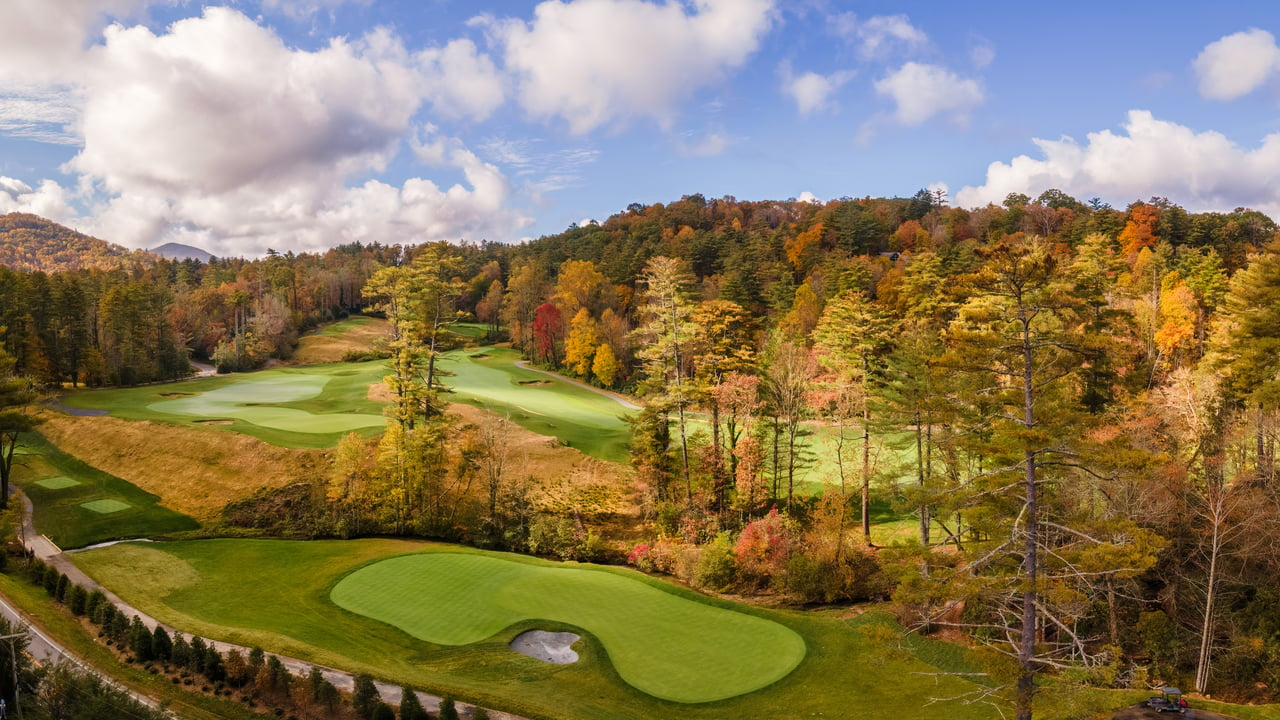
Highlands Falls Country Club is member-owned rather than developer-owned or corporately held. The club handles prospective members through its own membership office and publishes membership FAQs and an inquiry process. Highlands Country Club, founded in 1928 around the Donald Ross course where Bobby Jones practiced, is also member-owned. Member governance cuts both ways. You get a vote on how the club runs. You also carry exposure to whatever the membership decides to spend money on, which is where capital assessments come from. Because membership isn't conveyed by deed at either club, the seller's membership isn't automatically yours. Confirm the current application requirements, any sponsorship expectations, the initiation cost, and the approval timeline directly with the club before your due diligence period runs out.
Invitation-Only Clubs: Buying the House Is Not Enough
Cullasaja Club, between Highlands and Cashiers, has been a private club since 2000, and its membership inquiry page states plainly that memberships are by invitation only. The club limits membership deliberately and expects roughly 300 homes at full build-out. Wildcat Cliffs Country Club, on 365 acres at the base of Whiteside Mountain at 4,250 feet, states on its own site that membership is by invitation only. Bill Bergin renovated its George Cobb course in 2008, and the club runs no tee times. This is the model buyers most often misread. You can buy a home inside either gate and be told no. Anyone searching Cullasaja Club homes for sale should treat the membership conversation as a parallel track that starts before the offer, not after it.
Corporate-Owned: Old Edwards Club and the Assessment Question
Old Edwards Club is the outlier, and for some buyers it is the most interesting one. Old Edwards Hospitality Group owns it rather than its members, and its membership page states that members are contractually bound never to receive an assessment. Membership also carries privileges at Old Edwards Inn & Spa in downtown Highlands, and the Tom Jackson course is accessible to resort guests as well as members. Read the trade honestly. You give up member governance entirely — you have no vote, and the ownership group sets direction. In exchange, you remove the single most unpredictable line item in club-community ownership: the special assessment nobody saw coming. For a seasonal buyer who wants a fixed, knowable annual cost, that is a real advantage. Verify the assessment language in the actual membership documents rather than relying on the marketing page.
Semi-Private and Public Play
Sapphire National Golf Club is the plateau's answer for buyers who want golf without tying it to a specific neighborhood. It is a semi-private facility that offers memberships and also sells public tee times. Jackson County's visitor bureau lists membership and mini-membership rates starting at $500, an order of magnitude below private-club initiation on the plateau. Verify current pricing directly with the club, since published rates lag. What this buys you is freedom. You choose a home in Highlands, Cashiers, Sapphire, or near Lake Glenville on the property's own merits and handle golf separately. What you give up is governance, guaranteed tee times in peak season, and any argument that club access adds value to your specific deed.
What Each Access Route Does to the Real Estate
Property-linked equity | No | Yes | Yes | Narrower |
Member-owned equity | No | Yes, by application | Yes, member-voted | Narrower |
Invitation only | No | Yes, by invitation | Yes | Narrowest |
Corporate-owned | No | Yes | Contractually excluded at Old Edwards Club | Broader |
Semi-private | Not applicable | No | Minimal | Unaffected |
The pattern is consistent: the tighter the access, the smaller the pool of future buyers who can actually use what you are paying for. That is not a reason to avoid club communities. It is a reason to price the obligation into the offer and to plan a longer marketing window on the way out.
Where the Plateau Market Fits
The Highlands-Cashiers plateau recorded a $1.25 million median sales price and 111 average days on market in Q2 2026, based on closed sales through June 30, 2026. Community-level snapshots in the same period ran far higher — roughly $4.6 million at Highlands Country Club and $3.73 million at Mountaintop.
Two cautions on those community numbers. They come from small samples, and they describe the homes that sold, not the value of any particular home. An 111-day average on market also means club transferability and annual obligations belong in the property analysis, not just the lifestyle conversation. A buyer who cannot get approved is a buyer who cannot close.
How to Handle This Inside a North Carolina Contract
North Carolina gives you a due diligence period, and it's there for a reason. The due diligence fee is negotiated and paid directly to the seller. The North Carolina Real Estate Commission explains that terminating during the period is the buyer's unilateral decision, requires written notice, and typically returns the earnest money but not the due diligence fee. Practically, that means membership approval must resolve inside the window, or the window must be long enough to accommodate it. Request the following on day one:
- Recorded restrictions and any club or community declaration
- Club bylaws and the current membership agreement
- Current fee schedule: initiation, dues, food and beverage minimums, cart and trail fees
- Assessment history and any approved or pending capital project
- The transfer or resale process for the membership, in writing
- Confirmation of whether a waiting list exists and where you would sit on it
- For an invitation-only club, written confirmation of where you stand before you remove contingencies
Our due diligence process page walks through the NC timeline in full, and your closing attorney should review how the club obligations interact with the transaction before you remove any contingency. Start With the Club, Then the Home
A typical plateau engagement we run flips the usual order. The buyer plays or tours the clubs first, often on a Sapphire National seasonal package, decides which access model fits how they will actually use the place, and only then do we shortlist homes—comparing Highlands against Cashiers and Sapphire, with each property's membership obligations laid alongside its price. For buyers leaning toward less commitment, Highlands NC condos for sale within walking distance of Main Street and homes near Lake Glenville both work well with a semi-private membership. For buyers who want the club to be the center of the thing, the Highlands Falls community is worth touring early. We can arrange a tour near any named club and compare membership documents before you write an offer, or start with a free valuation if you are selling a club-community property and need to know how the membership affects your buyer pool. Reach out here. Frequently Asked Questions
How many country clubs are in Highlands NC?
What is the elevation of Highlands NC?
Highlands sits at an official average elevation of 4,118 feet within town limits, making it one of the highest incorporated towns east of the Mississippi River. For golfers, that altitude means the ball carries noticeably farther than at sea level and the playing season is shorter — several plateau clubhouses and courses run roughly May through October.
What county is Highlands NC in?
Highlands lies mostly in Macon County, with a portion extending into southwestern Jackson County. That split matters more than buyers expect: property tax rates, permitting, GIS records, and the register of deeds all differ by county, so two homes a mile apart can sit under different county jurisdictions.
Where is Cashiers NC?
Cashiers is on the Highlands-Cashiers plateau in Jackson County, centered on the intersection of US Highway 64 and NC Highway 107, about a 25- to 30-minute drive east of Highlands. Lake Glenville sits a few miles north along NC 107 at roughly 3,500 feet, the highest-elevation lake east of the Mississippi.
Does buying a home in a golf community get me a membership?
No, not automatically, at any Highlands or Cashiers private club. Property-linked clubs make purchasers eligible but still require approval. Member-owned clubs require an application. Cullasaja Club and Wildcat Cliffs are invitation-only. Treat membership approval as a separate transaction that should resolve inside your due diligence period.
Which Highlands clubs are invitation only?
Cullasaja Club and Wildcat Cliffs Country Club both state on their own sites that membership is by invitation only. Buying a home in either community does not create a right to join, so written confirmation of your membership standing is a due diligence item rather than a post-closing formality.
Can I play plateau golf without buying into a club community?
Yes. Sapphire National is semi-private and sells both memberships and public tee times, and Jackson County's visitor bureau lists memberships starting at $500. Old Edwards Club is also accessible to guests of Old Edwards Inn & Spa. That lets you choose a home anywhere on the plateau and handle golf access as a separate annual decision.
Which model has better investment potential?
Neither model guarantees appreciation. Property-linked membership can support resale appeal when the community is desirable, but it also shrinks the buyer pool to people who want both the house and the obligations. With 111 average days on market on the plateau in Q2 2026, liquidity and buyer pool size matter as much as the course itself.
What should I verify before buying a golf club home?
Confirm in writing whether membership transfers, whether initiation is separate from the purchase price, whether a waiting list exists, and what assessments are approved or pending. Request the recorded restrictions, club bylaws, membership agreement, current fee schedule, and resale process, and have the closing attorney review how the club obligations affect the transaction.
You May Be Interested In