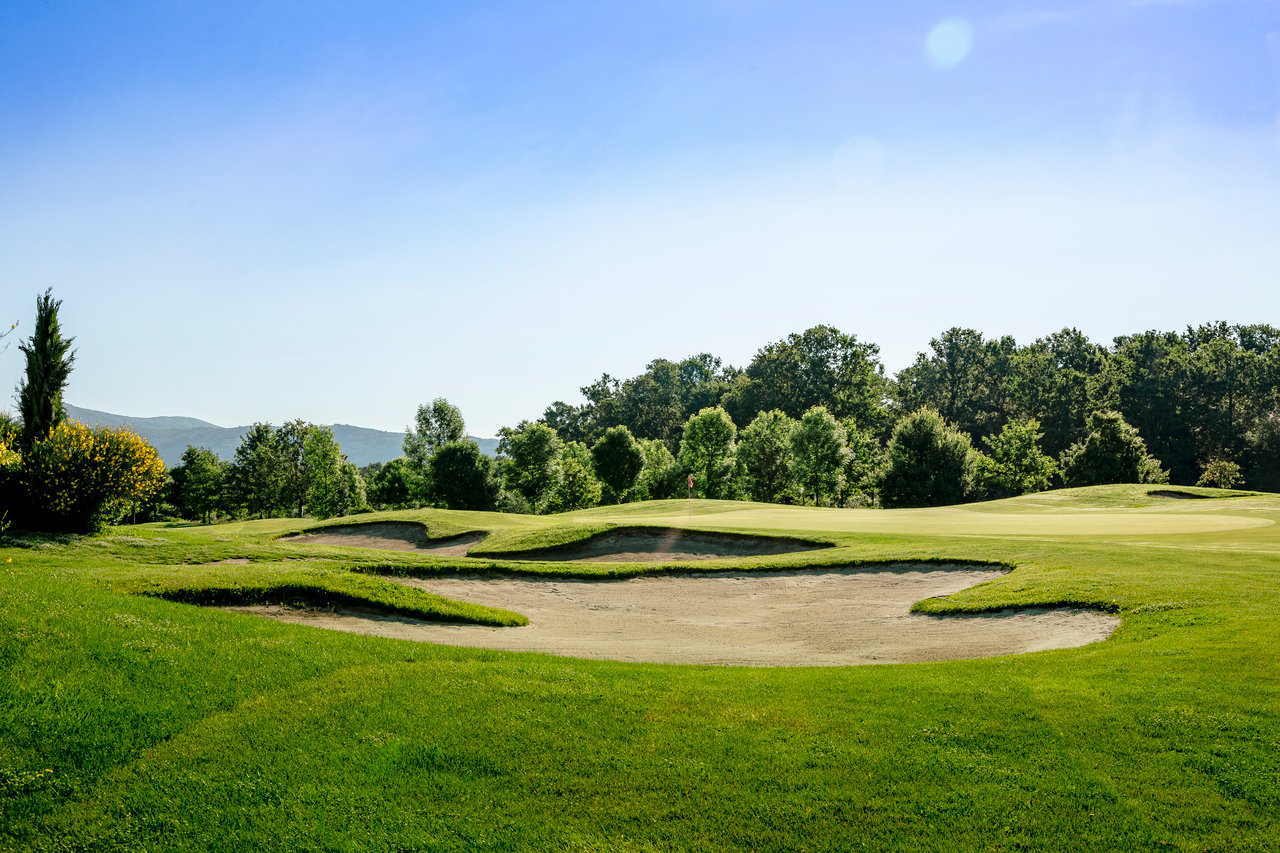
The elevation of the Highlands Plateau fundamentally changes how you play golf. At 4,000 feet, the ball carries 5 to 10 percent farther than at sea level, and afternoon mountain winds demand strategic shotmaking over raw power. Our team at Vignette Realty has guided out-of-state buyers through more than 550 transactions and $182 million in sales volume, and understanding the local golf clubs is often the first step in selecting a property.
The top private golf clubs in Highlands NC are Highlands Country Club, Cullasaja Club, Old Edwards Club at Highlands Cove, Wildcat Cliffs Country Club, and Highlands Falls Country Club. Initiation fees across these clubs typically range from $60,000 to $105,000 with annual dues of $5,000 to $15,000, and the right club depends on whether you want an equity stake with voting rights or a non-equity structure with predictable costs.
Before the list, one distinction matters: equity clubs sell you a literal ownership share with voting rights and possible fee refundability, but expose you to assessments for major projects. Non-equity clubs function as service agreements with no assessments and no vote. Each entry below tells you which model you are buying into.
1. Highlands Country Club: The Original
Opened in 1928, Highlands Country Club is the oldest club in the area and operates on a traditional equity model. Prospective members apply and secure two equity member sponsors, a process that preserves the club's multi-generational character.
Pros: Full equity ownership with a voice in governance and capital projects, the area's deepest history and social continuity, and strict membership caps that keep the course uncrowded.
Cons: The two-sponsor application makes access dependent on existing relationships, and equity members carry assessment exposure for major renovations.
2. Cullasaja Club: The Palmer Signature
Cullasaja Club is an Arnold Palmer signature design known for its dramatic elevation changes, and it operates as an equity club. The club holds Audubon Cooperative Sanctuary certification, reflecting a genuine commitment to environmental stewardship across one of the plateau's most scenic layouts.
Pros: A signature-designer course that plays unlike anything at sea level, equity governance for members who want a say, and certified environmental standards that protect the setting.
Cons: Equity structure means assessment exposure, and the club's integration with its residential community makes membership and property decisions intertwined.
3. Old Edwards Club at Highlands Cove: The Non-Equity Standard
Old Edwards Club is the premier non-equity option in the area, built around the Tom Jackson-designed GlenCove course. Members are contractually bound to never receive an assessment, the membership includes a 20 percent discount on accommodations at Old Edwards Inn and Spa plus resort amenities, and notably, you do not need to purchase real estate to join.
Pros: Contractual protection from assessments, resort-grade amenities well beyond golf, and membership without a property purchase requirement.
Cons: No voting rights or governance voice, and the initiation fee is non-refundable when you leave.
4. Wildcat Cliffs Country Club: The Mountain Classic
Situated at the base of the 4,930-foot Whiteside Mountain between Highlands and Cashiers, Wildcat Cliffs pairs a George Cobb-designed course with sweeping mountain vistas. Homes near the club benefit from immediate course access and some of the plateau's most dramatic scenery.
Pros: A classic Cobb layout in an unmatched natural setting, a tight-knit community feel, and strong property-value support for homes in the surrounding neighborhoods.
Cons: Membership is deeply integrated with the residential community, and inventory near the club is scarce and competitive.
5. Highlands Falls Country Club: The Gated Community Club
Highlands Falls Country Club anchors its gated residential community along the Highlands-Cashiers corridor, pairing golf with a full calendar of member social life. For buyers who want club and neighborhood to be the same decision, this is the most unified option on the list.
Pros: A true club-community model where home and membership integrate seamlessly, gated security, and an active year-round social calendar among the member households.
Cons: The club-community integration means evaluating the neighborhood and the club as a single purchase, and access follows property availability inside the gates.
How Club Proximity Impacts Property Values
The relationship between these clubs and real estate in Macon County is direct. The average home value in Highlands reached $1,066,200 in June 2026, up 6.1 percent year over year per Zillow, and properties within gated club communities command a premium driven by security, amenities, and social infrastructure. Land costs compound the math: the average price per acre in Highlands runs around $364,306, dramatically higher than the broader Macon County median near $29,721 per acre, per current land listing data.
Understanding the North Carolina Purchase Process
Securing a home near your preferred club requires navigating North Carolina's real estate laws. North Carolina is a buyer-beware state, and when you sign a purchase contract you pay a due diligence fee directly to the seller: non-refundable, compensating the seller for taking the property off the market while you inspect, and credited toward your purchase price at closing if you proceed, as outlined in the North Carolina Real Estate Commission's guidance.
A typical club-driven purchase we guide runs in a specific order: the family selects the club first, based on membership structure, waitlist, and social fit, and only then do we shortlist properties, because a home near the wrong club is the most expensive mistake in this market. Club diligence and property diligence then run in parallel through the due diligence period.
Next Steps for Your Highlands Search
Selecting the right private golf club in Highlands NC requires balancing your preferred membership structure with your real estate goals. The Vignette Realty team, with offices in Franklin and Highlands, provides specific insights into club waitlists, neighborhood dynamics, and current inventory. Schedule a video tour of luxury listings near the clubs or request a comprehensive valuation to start the conversation.
Frequently Asked Questions
How much does it cost to join a private golf club in Highlands NC?
Membership at private golf clubs in Highlands NC typically requires an initiation fee between $60,000 and $105,000, with annual dues ranging from $5,000 to $15,000. These figures vary based on whether the club is equity or non-equity and the extent of the amenities provided.
What is the difference between an equity and non-equity club membership?
Equity membership sells you an ownership share with voting rights on club governance, sometimes with partial fee refundability, but exposes you to assessments for major capital projects. Non-equity membership is a service agreement with contractual protection from assessments, no governance vote, and a non-refundable initiation fee.
Do I need to buy a home to join a Highlands golf club?
No, not at every club. Old Edwards Club allows you to join and access the Tom Jackson-designed GlenCove course and resort amenities without a real estate purchase, while clubs like Cullasaja, Wildcat Cliffs, and Highlands Falls are deeply integrated with their residential communities.
What is the difference between Due Diligence and Earnest Money in NC?
Due diligence money is a non-refundable fee paid directly to the seller for the right to inspect the property, while earnest money is a refundable good-faith deposit held in escrow. If you terminate during the due diligence period, you lose the due diligence fee but receive your earnest money back, and both are credited at closing if you purchase the home.
Are private golf clubs in Highlands open year-round?
Most operate seasonally due to the elevation and winter weather, with courses typically opening in early May and closing by late October or early November, though some clubhouses and fitness facilities maintain limited winter hours for local residents.